DRIVE-SHIFT tolerability profile
DELSTRIGO® DRIVE-SHIFT tolerability profile
DELSTRIGO® was shown to be generally well tolerated with an established safety profile in a 48-week study of patients with HIV-1:1
Overall, the safety profile in virologically-suppressed patients based on Week 48 data (n=670) was similar to that in patients with no antiretroviral treatment history at Week 48 (n=364). The most frequently reported adverse reactions in the latter group were dizziness (7%), nausea (5%), abnormal dreams (5%), fatigue (4%), headache (4%), and insomnia (4%).
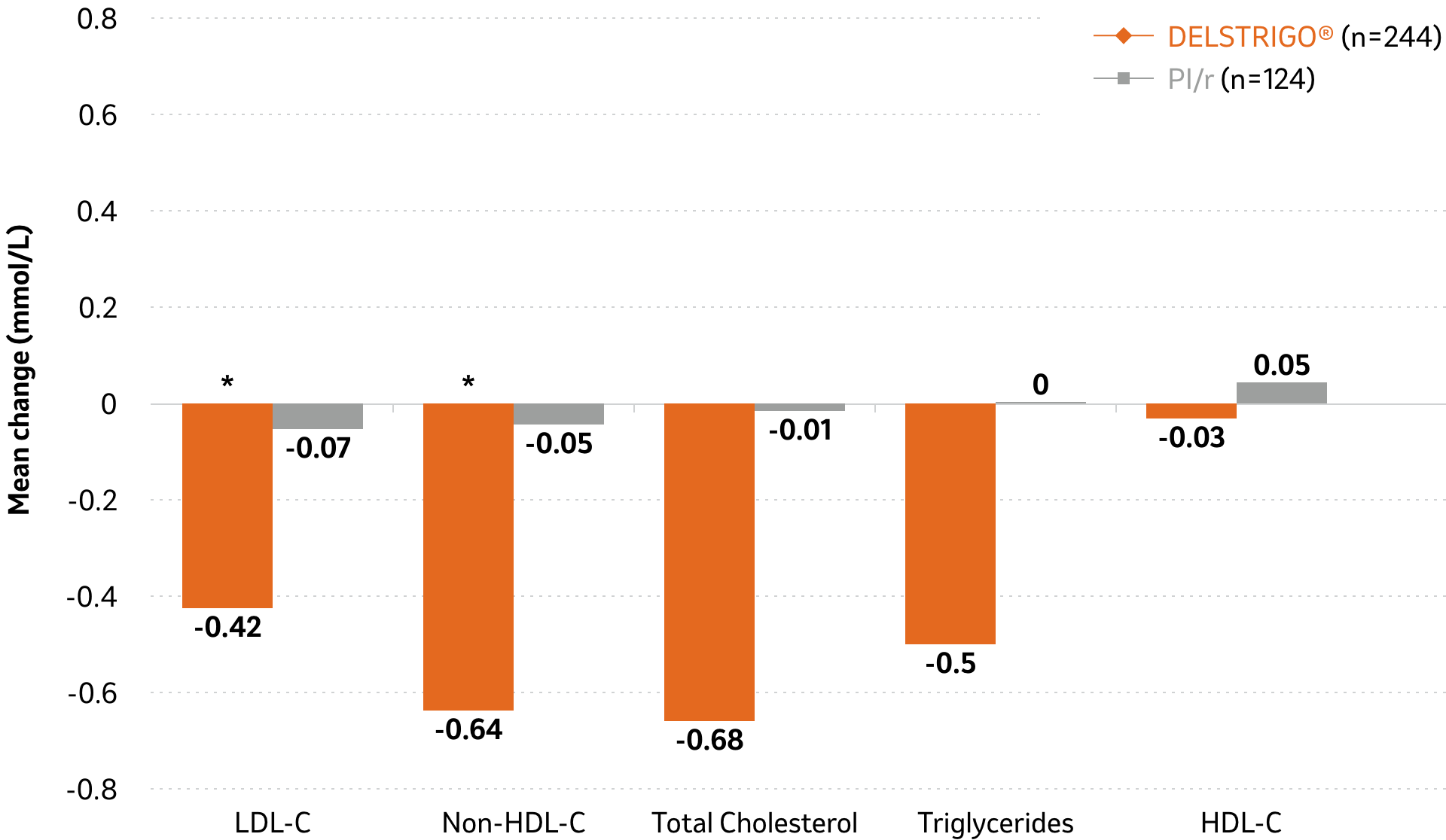
At week 24, improvements in LDL-C, non HDL-C, total cholesterol and triglycerides from baseline were seen in virologically-suppressed patients (n=244) who switched to DELSTRIGO® from PI/r (n=124)1
Mean change in lipid values at Week 0-24
Serum lipid levels may increase during ART. Disease control and life style changes may also be contributing factors. Consideration should be given to the measurement of serum lipids. Lipid disorders should be managed as clinically appropriate.1
Patients on lipid-lowering agents at baseline were excluded from these analyses (DELSTRIGO® n=26; PI/r n=13). Patients initiating a lipid-lowering agent post-baseline had their last fasted on-treatment value (prior to starting the agent) carried forward (DELSTRIGO® n=4; PI/r n=2).
*P<0.0001 for pre-specified hypothesis testing for treatment differences.
Adapted from DELSTRIGO® Product Monograph1
LDL-C=low-density lipoprotein cholesterol; HDL-C=high-density lipoprotein cholesterol; PI/r=ritonavir-boosted protease inhibitor regimen; ART=antiretroviral therapy
Reference: 1. DELSTRIGO® Product Monograph. Merck Canada Inc. December 10, 2024.
CA-DOR-00155